24 November 2026
Of the many varied organic compounds found across the planet, few are quite as strange or mysterious as the mushroom.
Not a vegetable, fruit, herb or spice, mushrooms occupy an entirely different branch of the natural world. Often classed as fungi, this familiar kitchen staple is actually the spore bearing fruiting body of a much larger fungal organism. In the ground, its underground network can extend far beyond what we see on the surface, sometimes covering acres. The part that we know as the mushroom is just a small part, which exists to allow the fungi to reproduce.
There are no end of fascinating facts about mushrooms, and a whole field of scientists, known as mycologists, dedicated to studying their remarkable properties. From their unusual biology and place in folklore to their culinary versatility and growing popularity in food innovation, mushrooms have got a lot to give. And while their biology makes them a source of great intrigue and promise, their value in the food industry is rather more down to earth.
Our relationship with mushrooms stretches back thousands of years. Archaeological evidence suggests that humans were gathering and eating wild mushrooms long before the development of modern agriculture, making them one of the oldest naturally sourced foods in our diets.
Like today, their appeal was not always purely culinary. Across different cultures and periods, mushrooms have been associated with medicine, spiritual practices and even magic. Their sudden appearance after rainfall, unusual shapes and colours, and tendency to grow in unexpected places helped establish their mysterious reputation.
Mushrooms also have a long history in British food culture. Wild varieties were once the only mushrooms available, and they were highly prized, though as commercial growing developed, cultivated closed-cap mushrooms became increasingly commonplace. By the nineteenth century, mushrooms had established themselves as a familiar ingredient in British kitchens, appearing in everything from soups and sauces to savoury dishes and traditional preserves.
One interesting example is mushroom ketchup. Long before tomato ketchup became the familiar household staple, mushroom based versions were popular in British cooking. Made using mushrooms, salt and seasonings, these rich, savoury preparations were valued for their ability to add depth to other ingredients. Mushroom powder was also used as a seasoning, providing that characteristic mushroom taste in a versatile and long lasting format.
Mushrooms are perhaps best known for their earthy, savoury flavour, but their appeal is more complex than this description suggests.
Their defining characteristic is umami, often described as the fifth basic taste alongside sweet, sour, salty and bitter. It is the quality responsible for much of the satisfying savoury taste associated with foods such as mature cheese, tomatoes, soy sauce and cooked meats.
Depending on the variety and how they are prepared, mushrooms can offer anything from delicate, subtle flavours to deeper, richer and more pronounced notes. Some have a mild, almost nutty character, while others bring a distinctive woodland earthiness. Cooking can intensify these qualities, particularly when mushrooms are browned, roasted or dried.
This combination of flavour and versatility makes mushrooms a valuable ingredient in their own right, as well as an effective way of building depth in a wider recipe. They can complement other savoury ingredients without necessarily dominating them, bringing a rounded quality to soups, sauces, seasonings and prepared foods.
Alongside their culinary appeal, mushrooms have an interesting nutritional profile.
They naturally contain a range of B vitamins, including riboflavin and niacin, alongside minerals such as potassium, selenium and copper. They also provide dietary fibre and contain small amounts of protein, while generally being low in calories and fat.
Their nutritional properties, combined with their savoury flavour and satisfying texture, have helped establish mushrooms as a useful ingredient in vegetarian and plant-based food development. Their naturally meaty qualities can contribute to the eating experience of meat-free products, while their umami character helps build flavour where meat-derived ingredients are not used.
Recent consumer interest has led to an emerging category of ‘functional mushrooms’, with chemical compounds in certain mushroom species being linked to possible biological effects. While some mushrooms have been used in traditional medicine for centuries, traditional use should not be confused with proven clinical benefits, and there is still much to learn in this category.
Fresh mushrooms are a familiar sight in kitchens, but drying offers another way to make the most of their flavour and versatility.
Removing moisture produces a convenient, shelf-stable ingredient that can be stored and incorporated into recipes in food manufacturing in variety of ways, in dishes such as risottos, soups and sauces, or added directly to recipes where they can rehydrate in liquid.
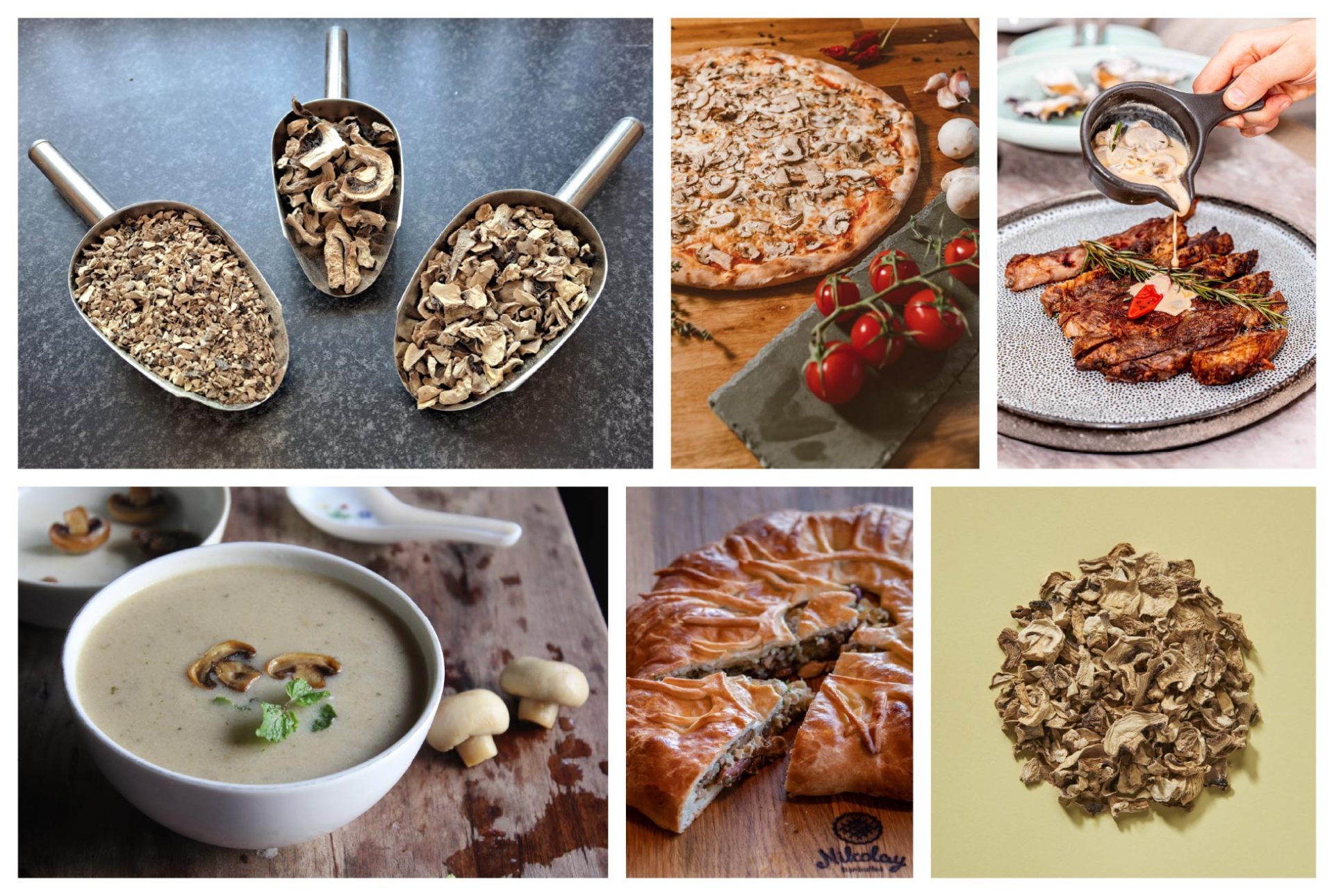
At J L Priestley & Co Ltd, we supply Champignons in kibbled, powdered and sliced forms, offering different ways to introduce their characteristic savoury flavour into food applications.
Mushroom powder offers a fine format, allowing flavour to be distributed evenly throughout a recipe. It is particularly useful in seasonings, coatings, sauces, stocks and dry mixes, where a concentrated mushroom note can add subtle depth without introducing larger pieces.
Kibbled mushrooms provide visible pieces and a more substantial texture, making them suitable for products where the presence of mushroom is part of the finished eating experience. They can be incorporated into soups, fillings, savoury mixes and prepared foods.
Sliced mushrooms offer another dimension, with larger, recognisable mushroom pieces adding aesthetic appeal as well as a characteristic texture.
The choice of format will depend on the intended application, desired texture and flavour profile. Whether used as a recognisable ingredient or as part of a more complex seasoning blend, dried mushrooms offer manufacturers plenty of scope to work with this familiar flavour in different ways.
From ancient foraging traditions and folklore to modern food development, mushrooms have long occupied an unusual niche in our relationship with food and the natural world.
Their appeal is not difficult to understand. They bring a distinctive savoury flavour, a useful nutritional contribution and considerable versatility across different cuisines and applications. And while fresh mushrooms may be the most familiar form to home cooks, dried formats offer manufacturers another way to make use of their flavour, with the convenience and flexibility needed for a wide range of finished products.
Whether adding depth to a seasoning, enriching a sauce or providing a recognisable ingredient in a prepared food, mushrooms remain a dependable choice with endless potential.